
An IP rating tells you how an electrical product or enclosure is classified for protection against access to hazardous parts, solid foreign objects and water. If you’ve ever looked at an electrical enclosure, light, plug, socket or other electrical product and noticed a code such as IP44, IP54, IP65 or IP67, you’ve encountered an IP rating.
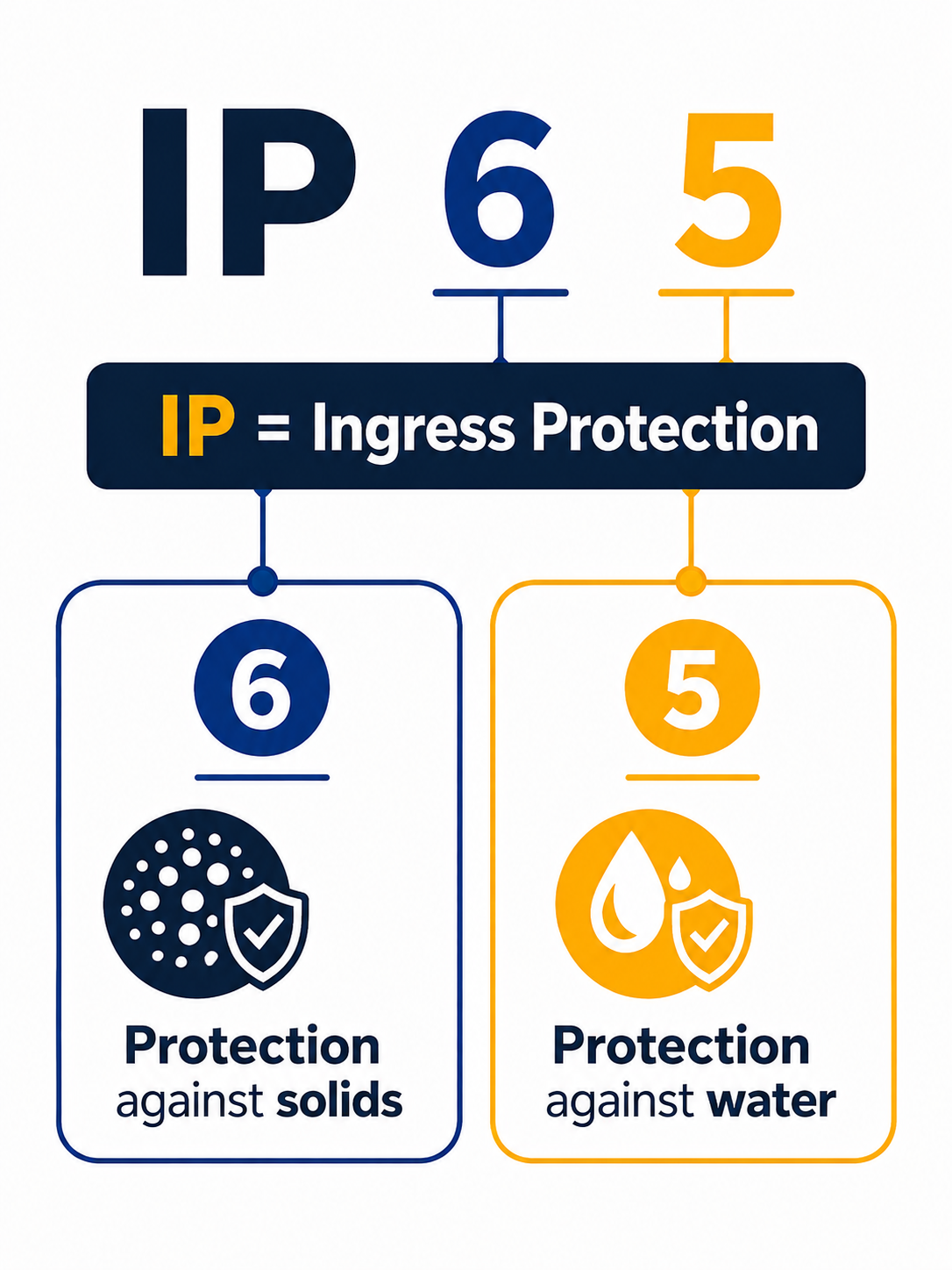
IP stands for Ingress Protection. The IP Code is an internationally recognised classification system defined by IEC 60529. It describes the degree of protection provided by an enclosure against access to hazardous parts and the ingress of solid foreign objects and water.
In practical terms, an IP rating helps you understand the level of protection an enclosure provides against specific forms of solid-object and water ingress.
This becomes particularly important when choosing electrical equipment for places where dust, moisture or water may be present.
You might encounter IP ratings on:
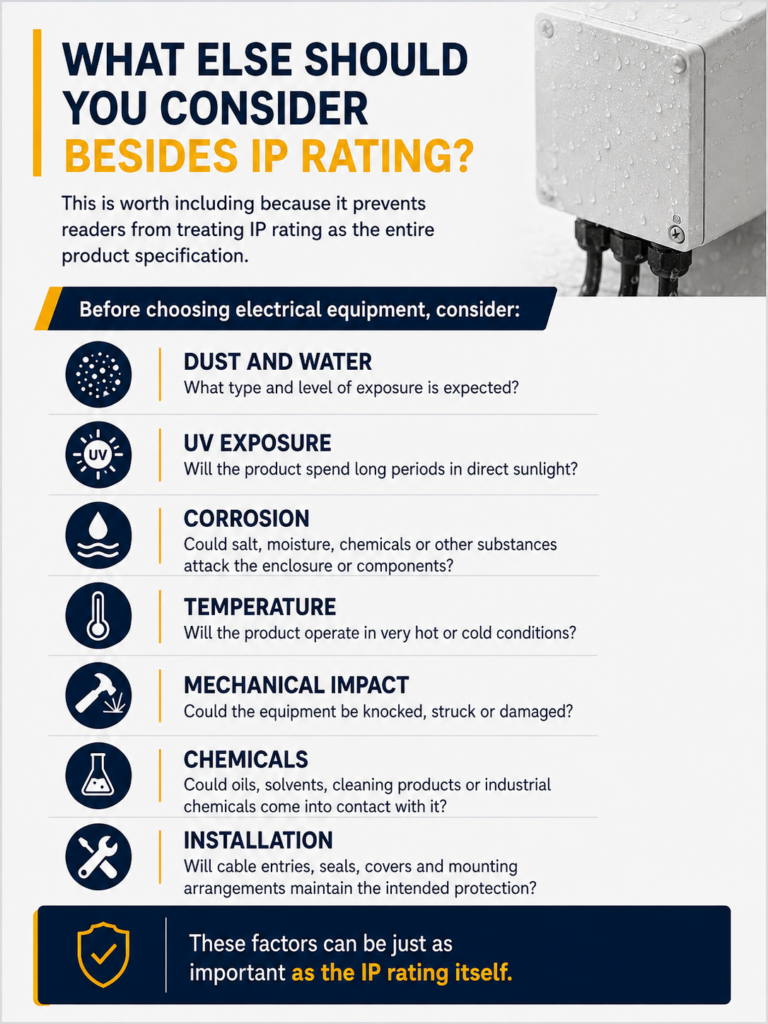
However, an IP rating is only one part of a product’s specification. It doesn’t automatically tell you whether a product is suitable for every outdoor, industrial, wet or hazardous environment.
The key is to understand what the two numbers actually mean and then match the product to the conditions in which it will be used.
IP ratings can look confusing at first, but once you understand what the two numbers represent, the most common ratings become much easier to interpret.
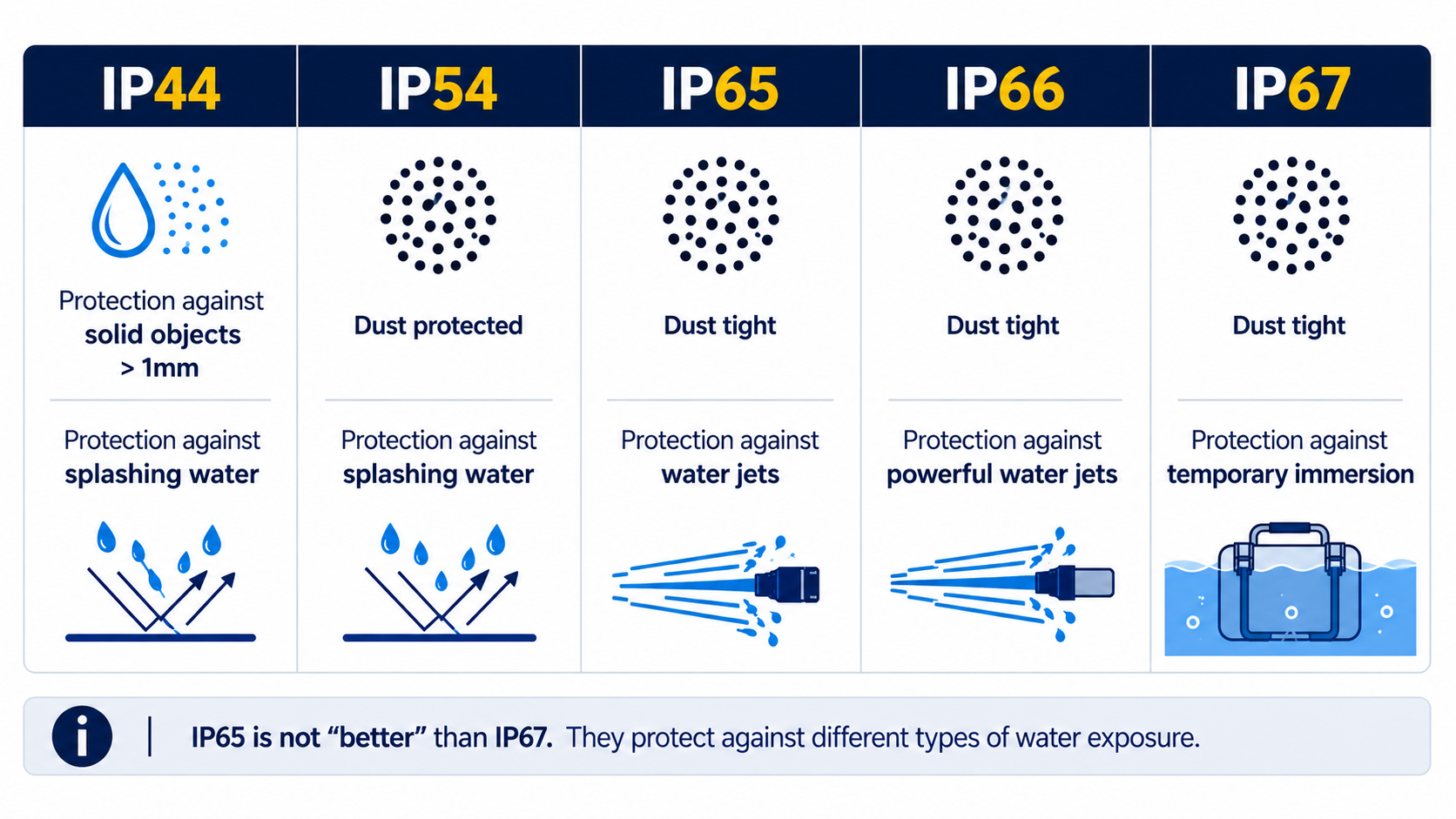
Below are five IP ratings you’re likely to encounter when looking at electrical products, lighting, enclosures, plugs, sockets and other electrical accessories.
💡 QUICK TIP
Don’t choose an IP rating simply because the number is higher.
The correct rating depends on what the product will actually be exposed to.
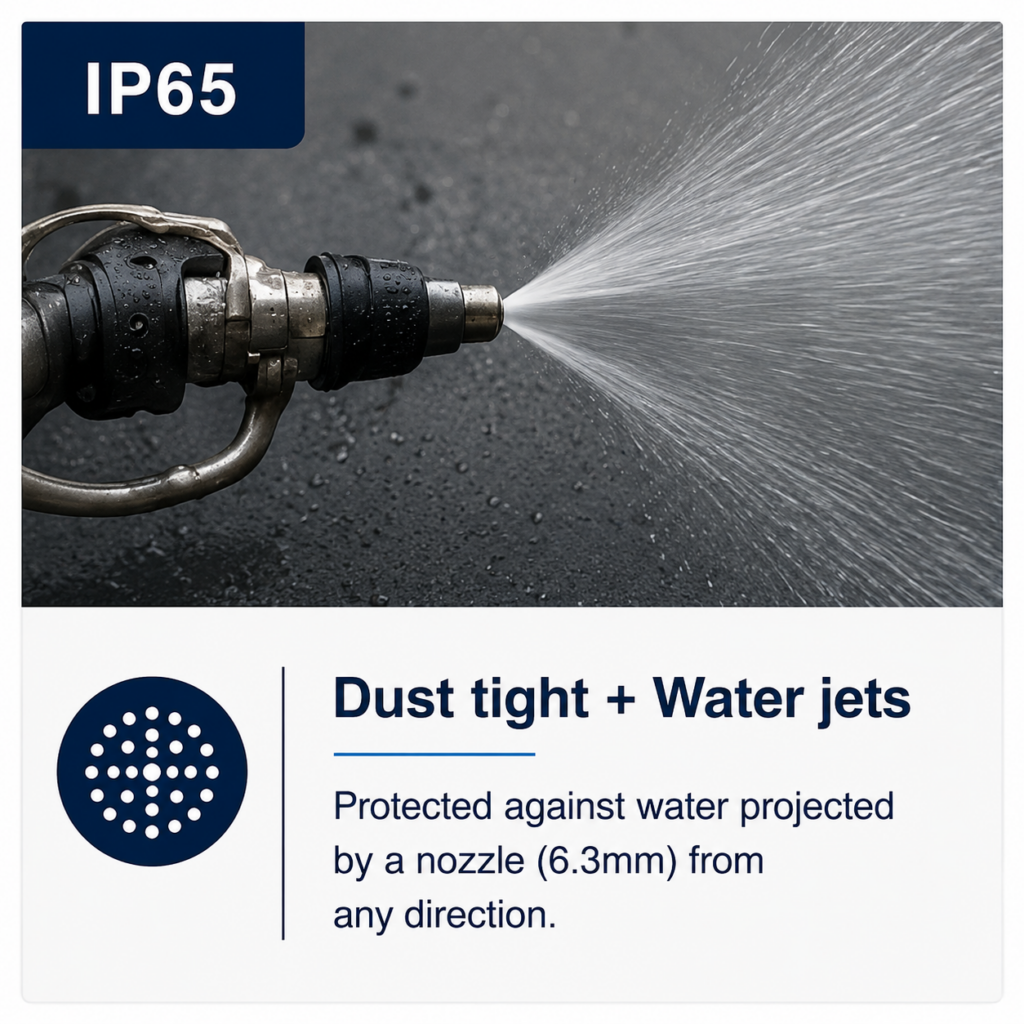
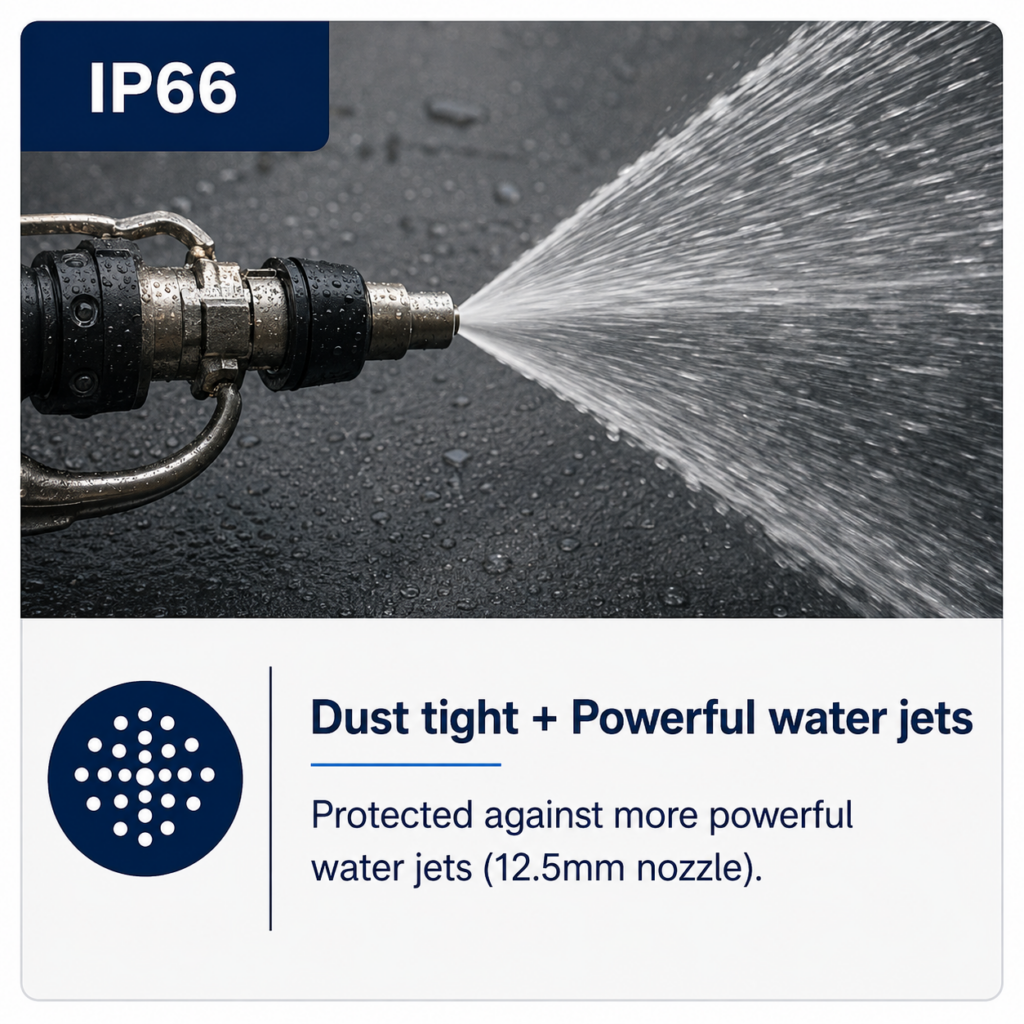
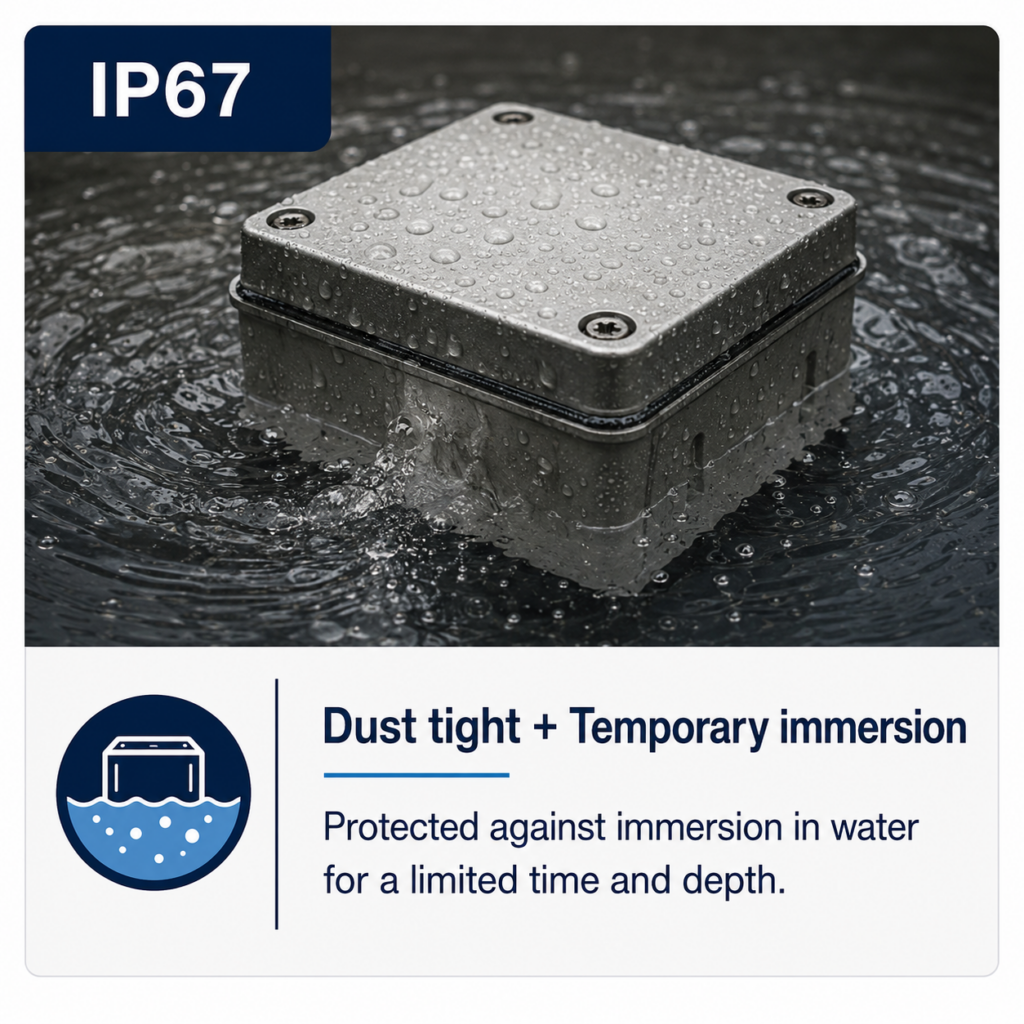
IP65, IP66 and IP67 are three of the most commonly encountered IP ratings on electrical equipment. All three provide dust-tight protection, but their water-protection classifications are different.
That distinction is important when choosing electrical equipment for outdoor areas, workshops, industrial environments, washdown areas or locations where water exposure is possible.
The key difference is the second digit:
So although IP67 contains a higher number than IP65, it isn’t automatically the better choice for every application.
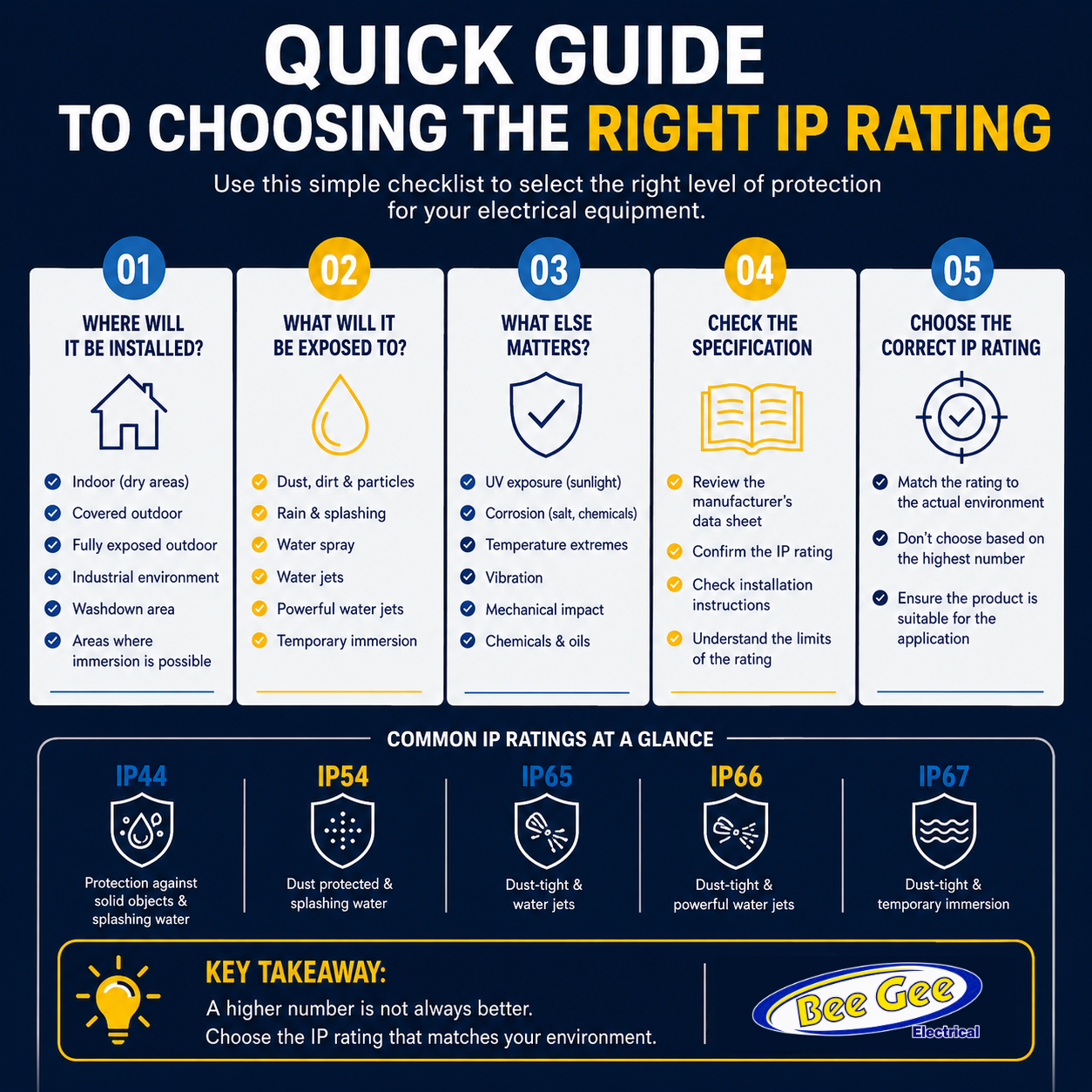
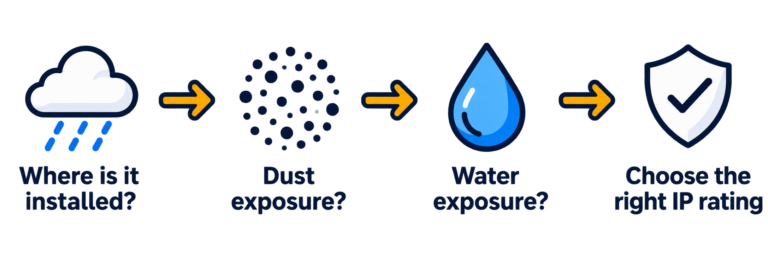
There isn’t one IP rating that is automatically right for every electrical installation.
The correct rating depends on where the product will be installed and what it will be exposed to.
An electrical enclosure inside a dry office, a light mounted under a covered patio and a junction box installed in a dusty outdoor workshop can all have very different environmental requirements.
Instead of starting with a number, start with the environment.
Speak to our team about your application and environment.
Your trusted electrical supplier in Springs for quality products, reliable service and expert support.
Monday – Friday
08:00 – 17:00
Saturday
08:00 – 11:00
Sunday & Public Holidays
Closed