
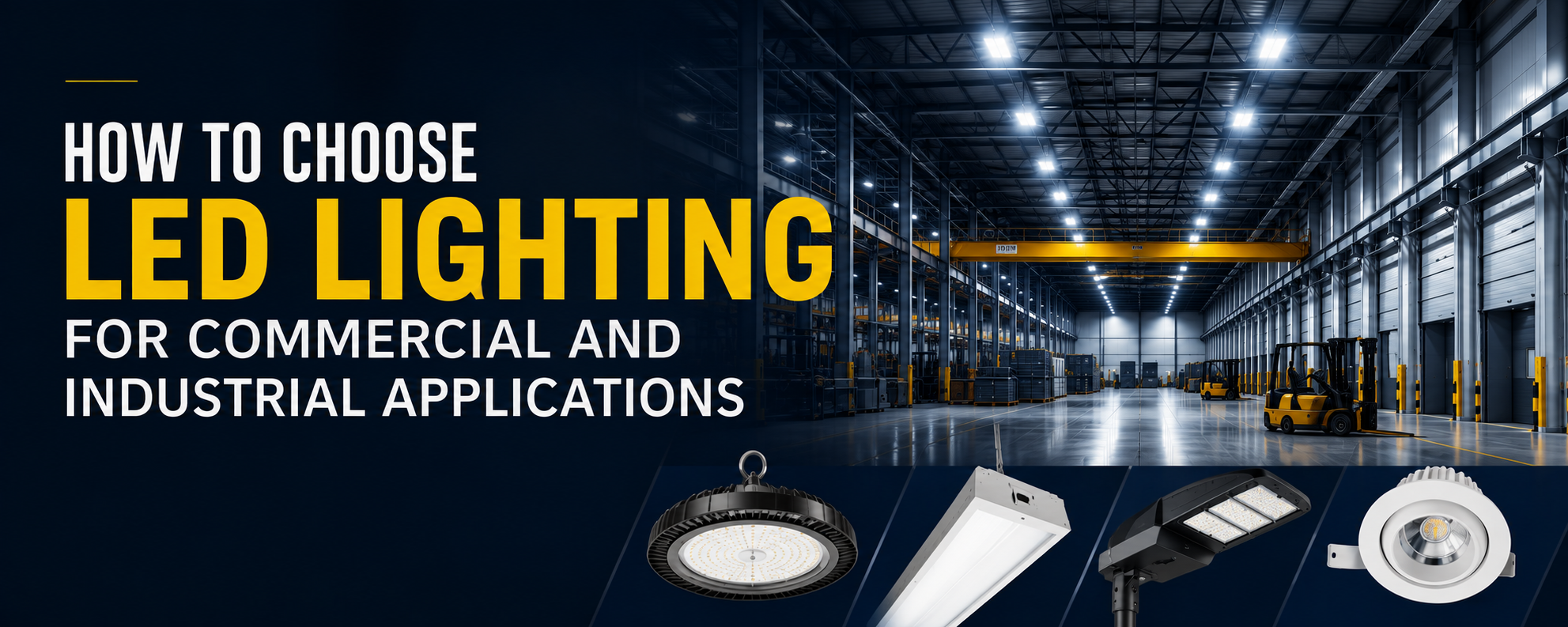
Choosing commercial LED lighting for a commercial or industrial space is not simply a matter of replacing an old fitting with an LED equivalent.
A warehouse, workshop, retail store, office, parking area and manufacturing facility all have different lighting requirements. The wrong product can result in poor visibility, unnecessary energy consumption, uncomfortable glare, inadequate coverage or premature failure.
The good news is that once you know what to compare, selecting the right LED lighting becomes far more straightforward.
This guide explains the key factors to consider when choosing LED lighting for commercial and industrial applications.
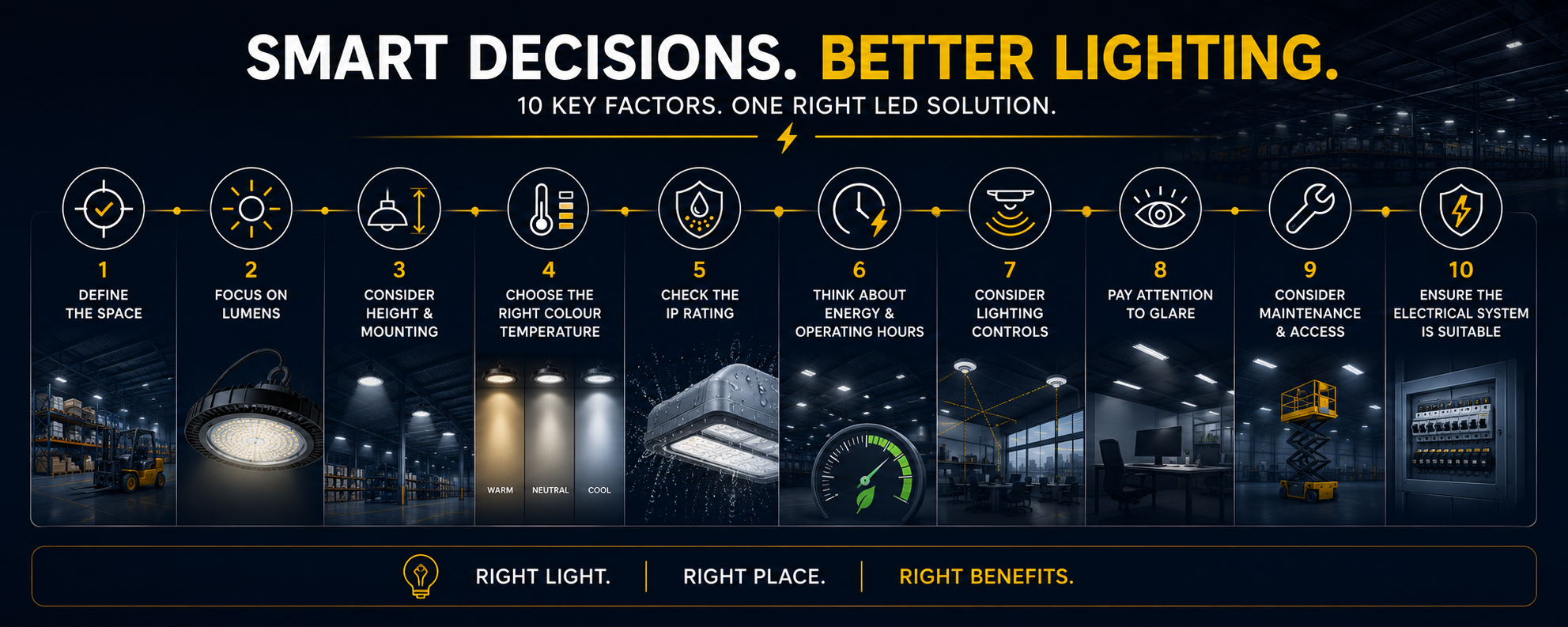
Before comparing wattages or product prices, consider what the lighting needs to achieve.
Ask:
For example, a warehouse with high ceilings may require high-output fittings designed to distribute light over a large area.
An office, on the other hand, may require more uniform lighting that supports comfortable everyday work.
A workshop may need stronger, more focused lighting around machinery or workstations.
The application should guide the product selection.
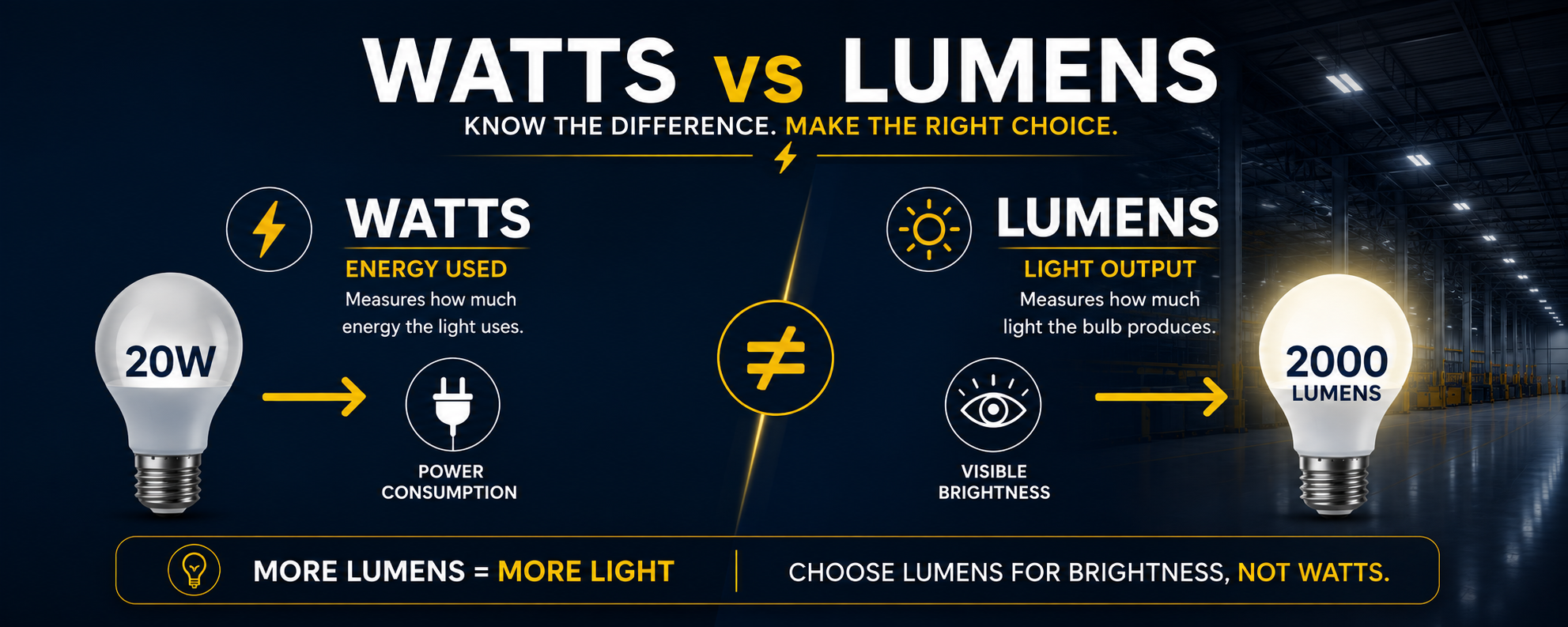
One of the most common mistakes when choosing commercial LED lighting is focusing only on wattage.
With older lighting technologies, wattage was often used as a rough indication of brightness. With LEDs, this comparison is less useful because LED products can produce different levels of light output while consuming different amounts of power.
The more important figure is generally the lumen output.
Lumens indicate how much visible light a fitting produces.
When comparing products, ask:
How many lumens does the fitting produce, and is that light output suitable for the application?
A lower-wattage LED fitting may produce sufficient light for one application, while a larger industrial area may require a significantly higher-output solution.
The goal is not simply to install the brightest possible lighting. It is to achieve appropriate illumination across the working area.
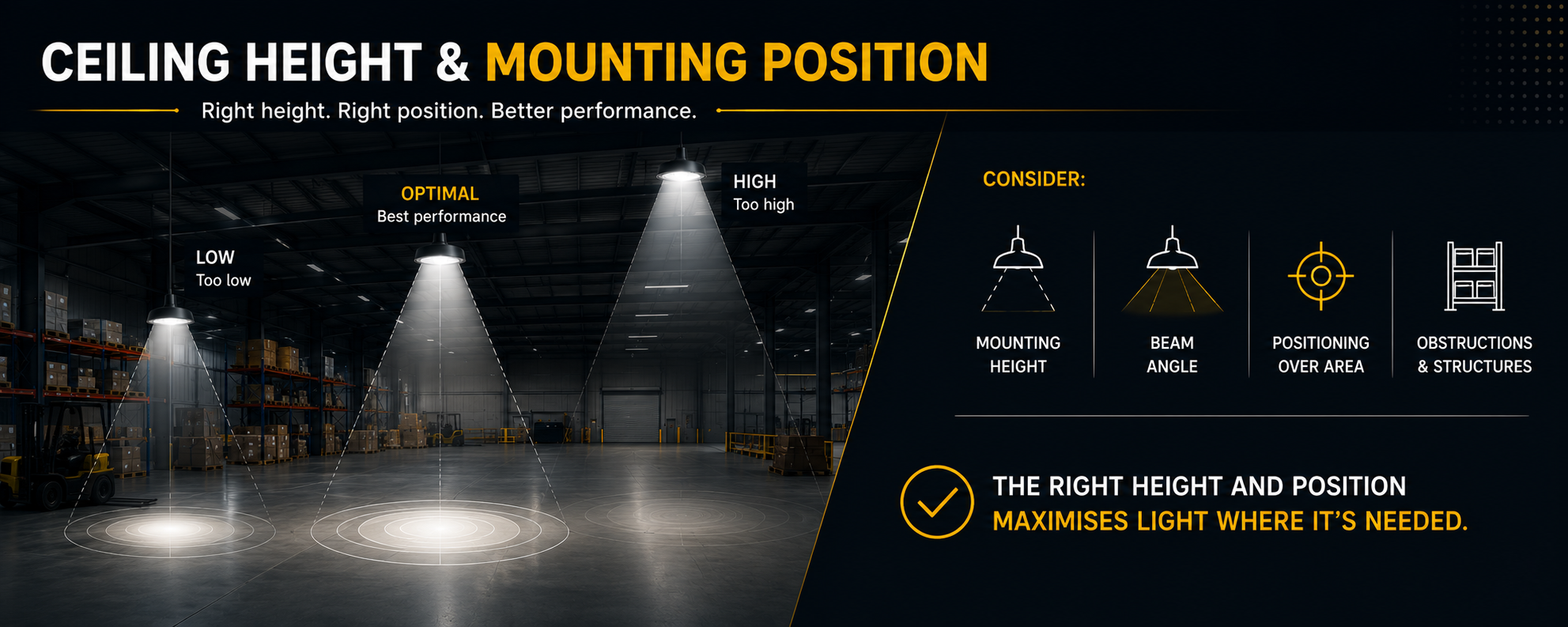
When selecting commercial LED lighting, the mounting height and position of each fitting should be considered before choosing a product.
A fitting that performs well at a lower installation height may not provide sufficient light distribution when mounted much higher.
For example:
Areas with lower ceilings may be suited to products such as:
Warehouses, factories and large workshops may require lighting designed for higher mounting positions, such as:
The higher the mounting point, the more important light distribution and beam characteristics become.
Selecting a high-output fitting without considering how the light spreads can still result in dark areas or uneven coverage.
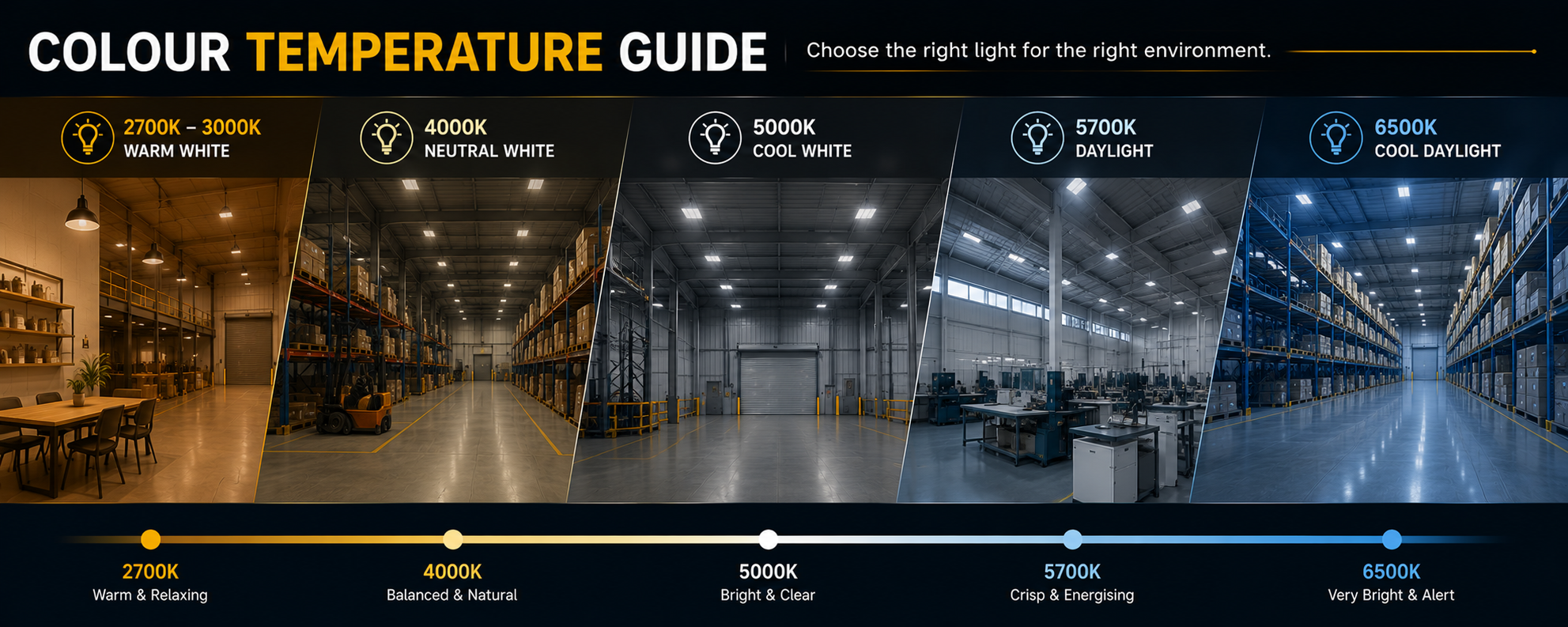
LED lighting is available in different colour temperatures, typically measured in Kelvin.
The colour temperature affects the visual appearance of the light.
Warm white lighting produces a softer, warmer appearance.
It may be suitable for:
Neutral white provides a more balanced appearance.
It can work well in:
Cooler colour temperatures generally create a brighter, more clinical appearance.
They are often considered for:
The best choice depends on the environment and the activities being performed.
Colour temperature should not be selected purely because one option appears brighter. Lighting quality and suitability for the working environment matter too.
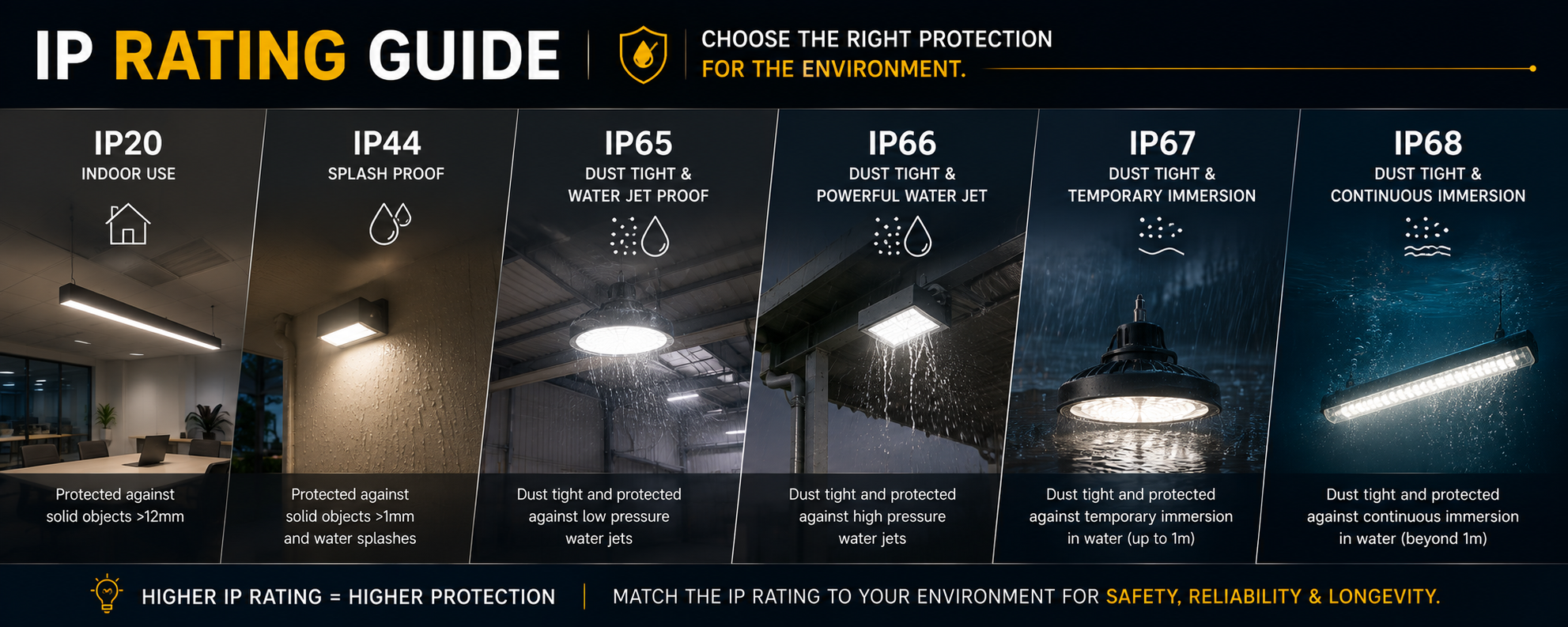
Not every LED fitting is suitable for every environment.
The IP rating, or Ingress Protection rating, provides information about the level of protection against solid objects and moisture.
This becomes particularly important in areas exposed to:
For example, a fitting intended for a clean indoor office environment may not be appropriate for an outdoor area or dusty workshop.
Before purchasing, consider:
The environmental conditions should always be considered alongside the lighting performance.
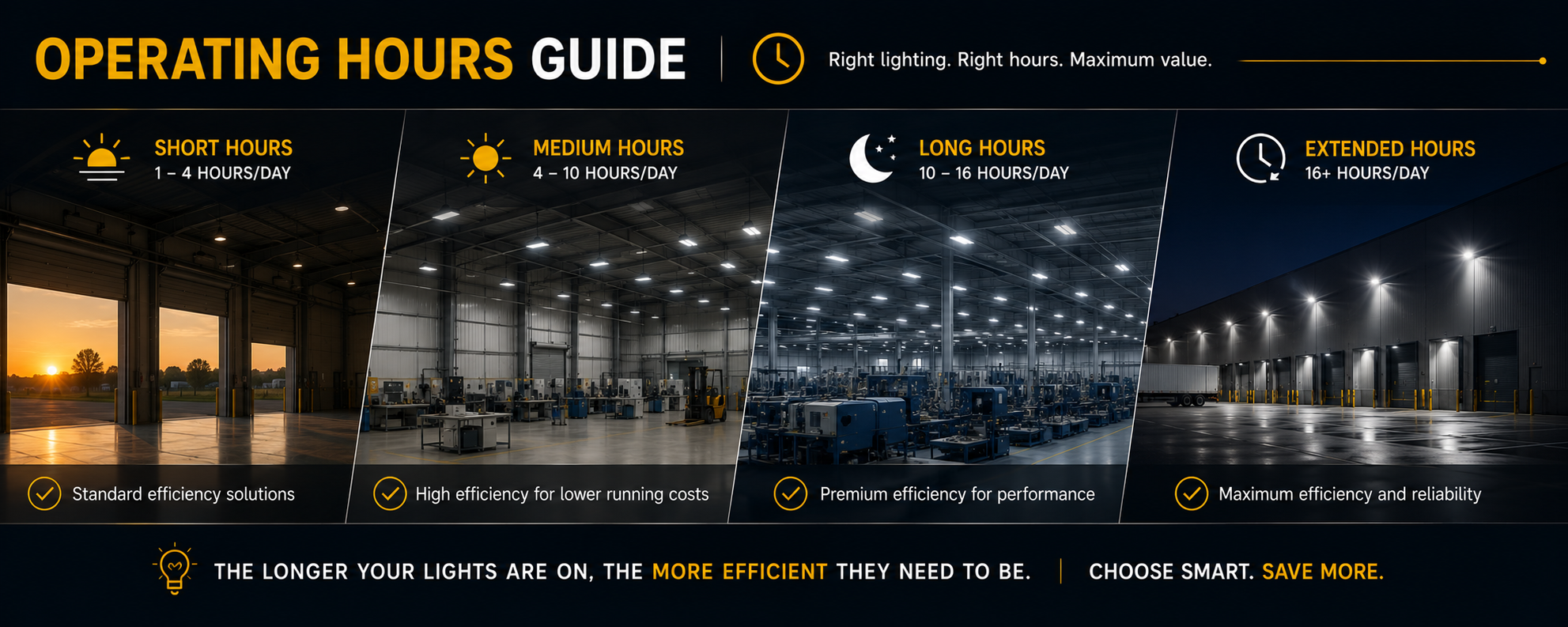
Commercial and industrial lighting can operate for many hours each day.
This means even relatively small differences in energy consumption can become significant over time.
When evaluating a commercial LED lighting upgrade, compare:
The objective is not simply to buy the lowest-wattage product.
A lower-power fitting that does not provide sufficient light may result in more fittings being installed, reducing the expected energy-saving benefit.
A proper comparison considers both energy consumption and the amount of useful light being delivered.
South Africa’s broader energy policy and infrastructure environment continue to place greater emphasis on energy efficiency and more effective electricity use. Energy-efficiency projects remain an active area of public and private-sector investment, including lighting upgrades and smarter control systems.
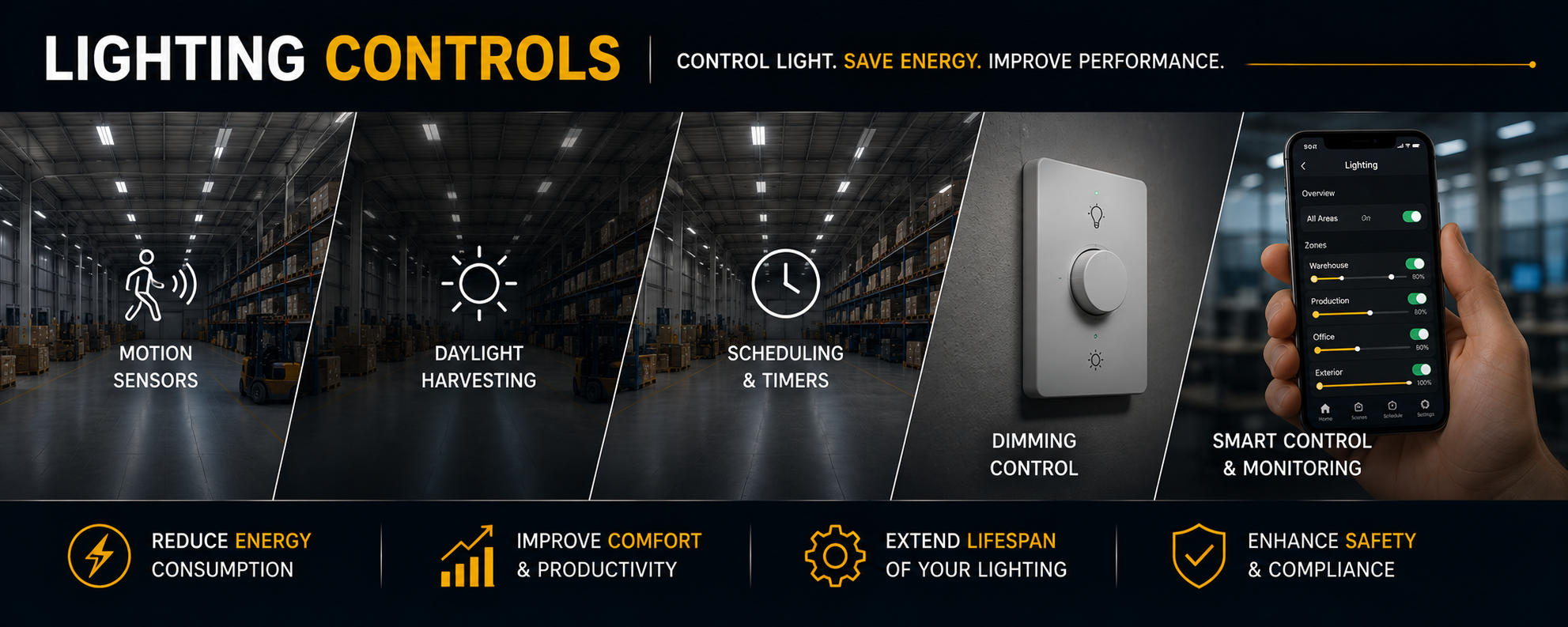
Lighting does not always need to operate at full output all day.
Depending on the application, controls can help reduce unnecessary energy use.
Options may include:
For example, lighting in a storeroom does not necessarily need to remain fully illuminated when nobody is present.
Similarly, areas with good natural daylight may benefit from lighting controls that respond to changing light levels.
The lighting industry is increasingly moving toward connected and intelligent systems that allow monitoring, control and maintenance to become more proactive.
For larger facilities, the potential benefits of lighting controls should be considered as part of the overall lighting design rather than as an afterthought.
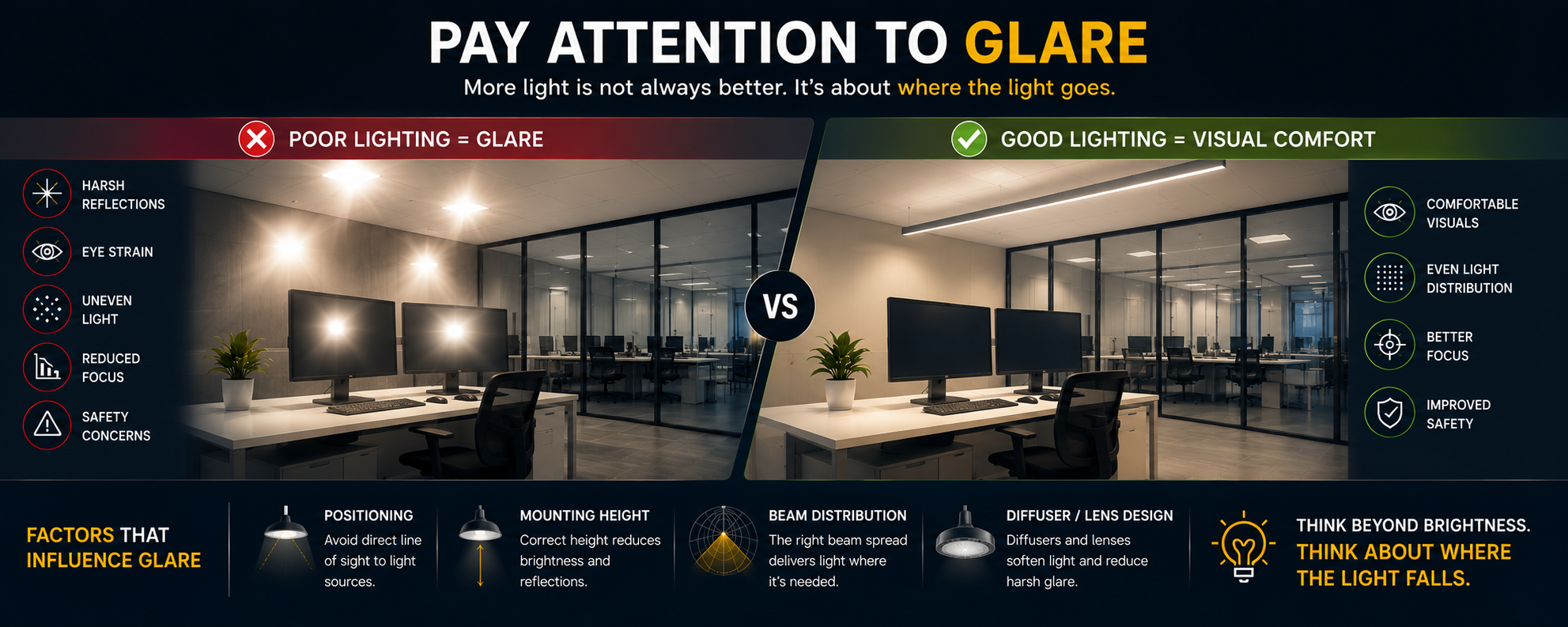
More light is not always better.
Poorly positioned or incorrectly selected lighting can create glare, which may cause discomfort and reduce visibility.
Glare can be particularly problematic in:
The positioning of the fitting, mounting height, beam distribution and diffuser design can all influence visual comfort.
When planning a lighting installation, consider not only how much light is produced, but where that light will fall.
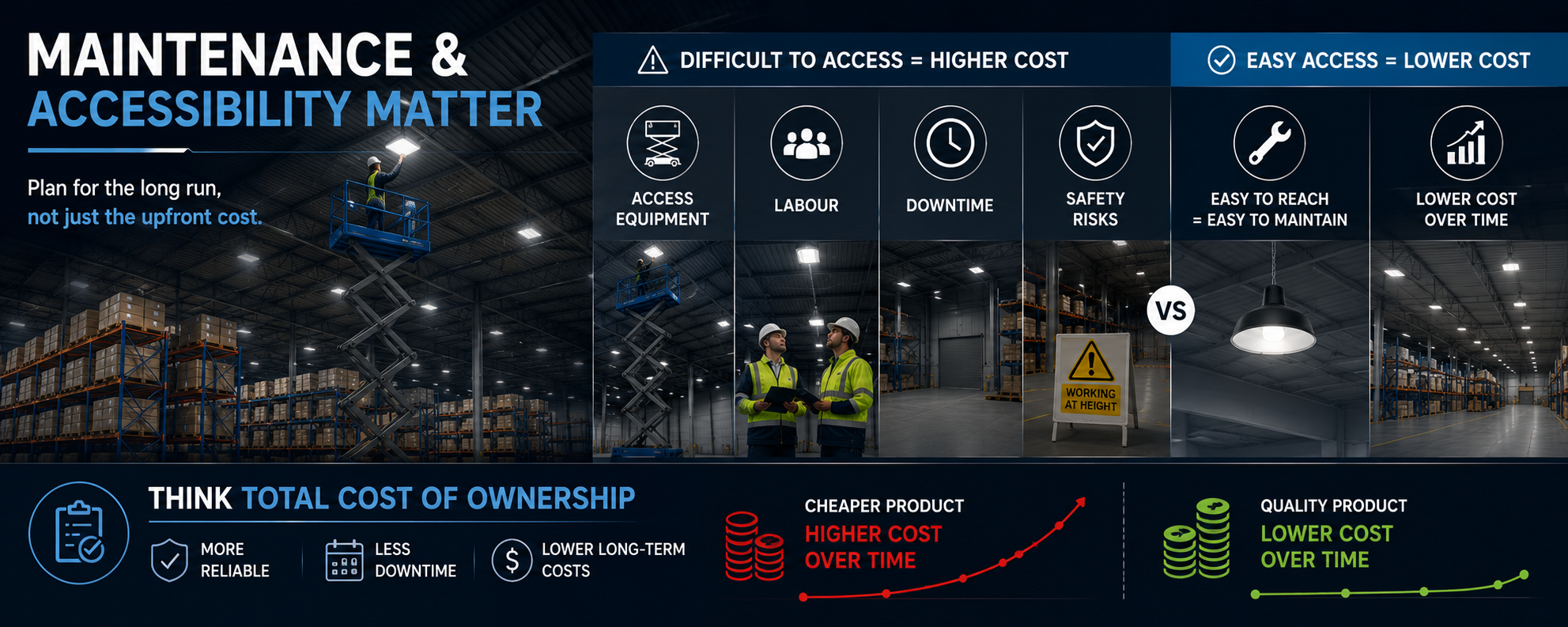
LED lighting is often selected partly because of its lower maintenance requirements compared with older technologies.
However, the location of the fitting still matters.
Replacing a failed fitting in a high warehouse ceiling can involve:
For difficult-to-access areas, product reliability and maintenance planning become particularly important.
It can be worth considering the full cost of ownership rather than focusing only on the initial purchase price.
A cheaper product that requires frequent replacement can become more expensive over the life of the installation.
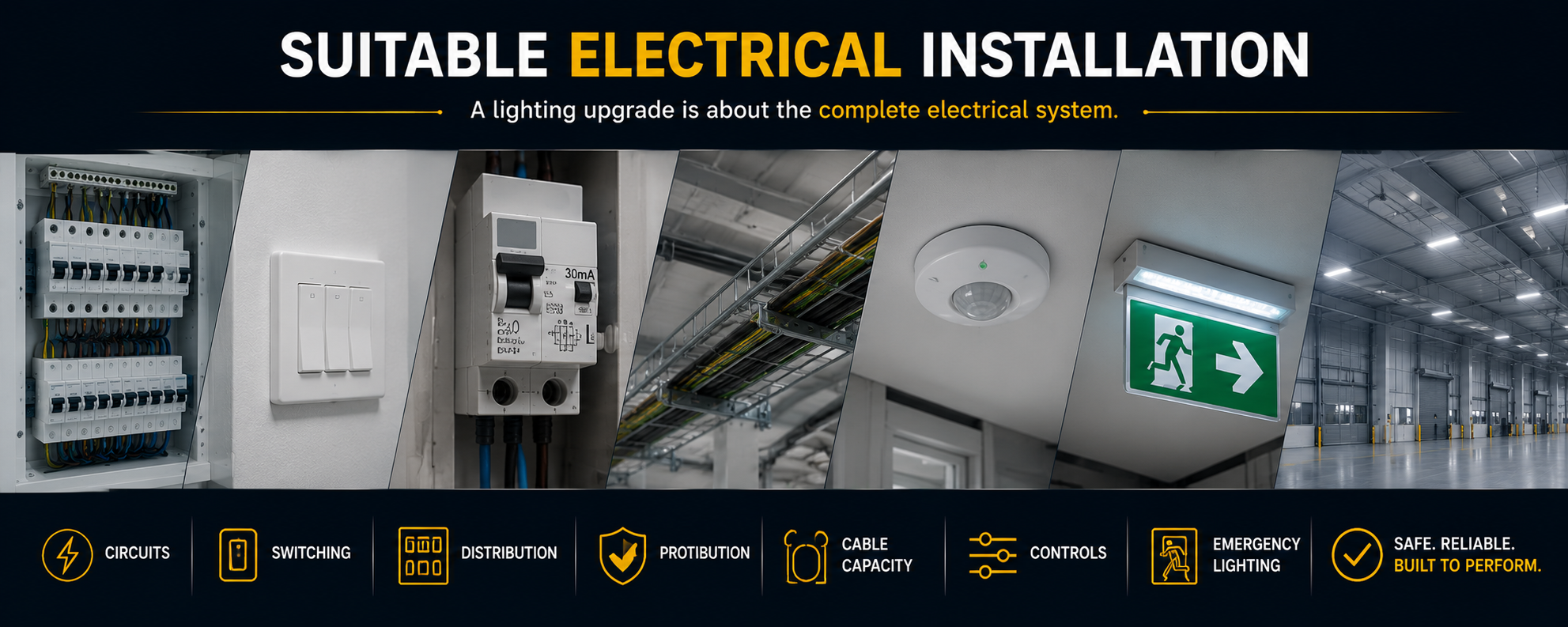
A lighting upgrade is not only about the light fittings themselves.
The existing electrical installation may also need to be considered.
Depending on the project, factors may include:
Commercial and industrial projects should be assessed as complete electrical systems rather than collections of individual products.
If you are upgrading a significant number of fittings, changing the layout or introducing new controls, professional electrical assessment may be appropriate.
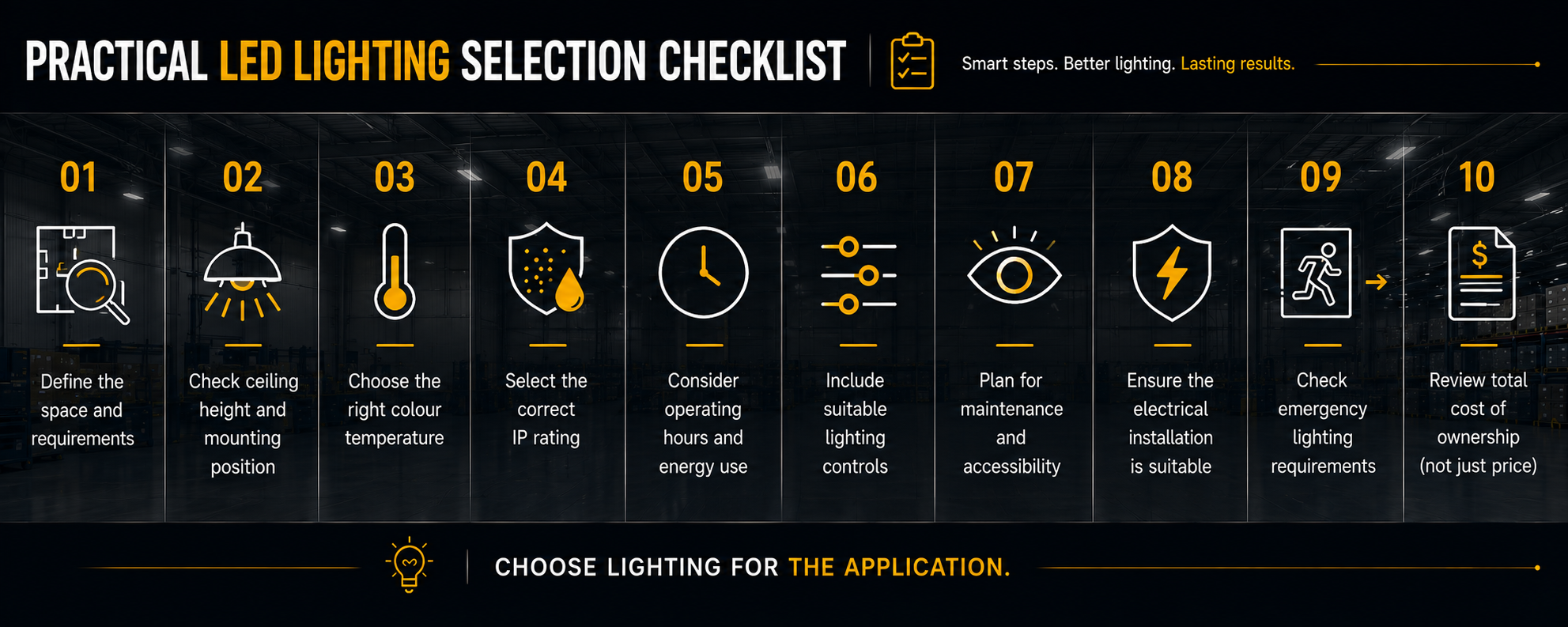
The best commercial LED lighting solution depends on far more than the wattage printed on the box.
By considering light output, mounting height, colour temperature, environmental conditions, controls, energy use and long-term maintenance, businesses can make more informed lighting decisions.
Whether you are upgrading a warehouse, fitting out a new office, improving workshop visibility or replacing outdated lighting, selecting the right products for the application can help improve performance, efficiency and reliability.
Bee Gee Electrical can help businesses, contractors and customers source electrical and lighting products suited to their project requirements.
If you know what you need, request a quote.
If you are still comparing options, speak to the Bee Gee Electrical team about the type of application, environment and electrical requirements so you can make a more informed product selection.
Contact Bee Gee Electrical to discuss your lighting or electrical product requirements.
References & Further Reading
Your trusted electrical supplier in Springs for quality products, reliable service and expert support.
Monday – Friday
08:00 – 17:00
Saturday
08:00 – 11:00
Sunday & Public Holidays
Closed